From the steel-barred stall where the dairy-mother weeps,
To the high-speed line where the weary worker sleeps,
A single, vast white canvas is spread,
Woven from the threads of patriarchy we dread.
Behind the cage of cold and steel-barred gloom,
A worker's spirit breaks in a slaughter room.
For countless lives unseen, denied the warming sun,
The profit engine turns, the crushing wheel is spun.
On stolen lands where Indigenous voices bleed and fall,
Colonial greed casts shadow across the living all.
The earth itself is caged, its heartbeat trapped and tied,
Bound in the selfsame chain where sacred life is priced.
The wounded threads cannot break alone,
For the ruler’s power holds a divided throne.
To rank the deep wounds is a failure of sight,
Our shared liberation is forged in the fight.
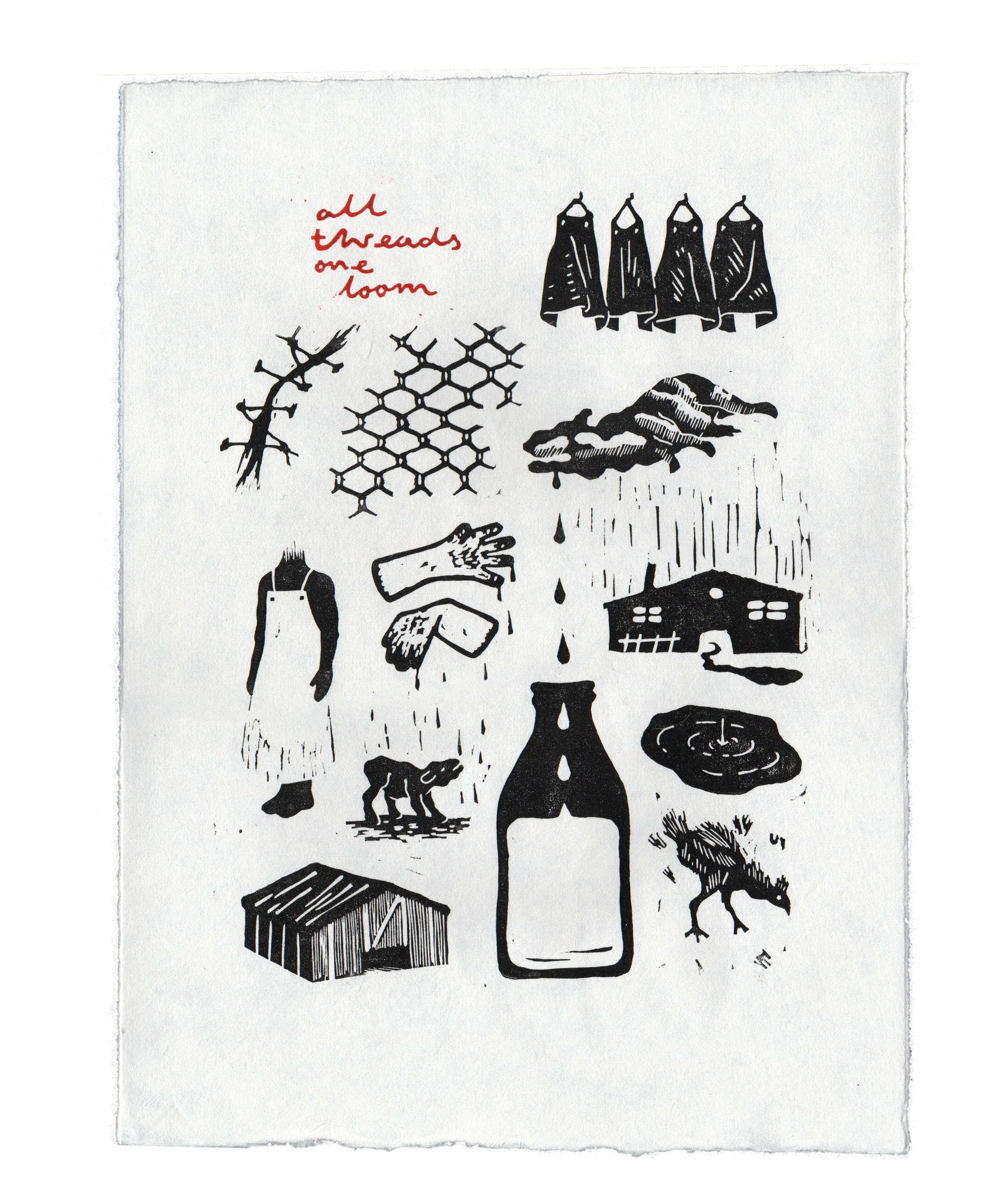
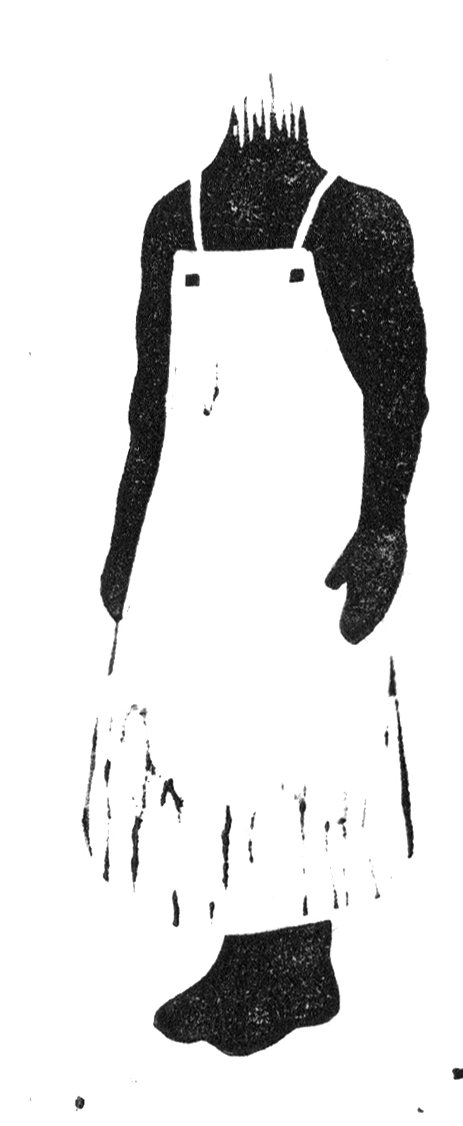
Artwork by Ico Mosquera
The Dissection of a Poem, an essay
All threads, One Loom: The Intersection of species and systemic oppression
As someone who looks at all species as equal just like I do this for race or gender, I write this essay using my poem's verse as a structural framework to unweave the architecture of interconnected oppression binding non-human animals and humans alike. By examining its stanzas, we will trace four crucial, interconnected threads that reveal the true nature of this systemic oppression: the mechanisms of bodily control linking speciesism and sexism; the commodification of labor uniting speciesism and classism; the structural devaluation of lives bridging speciesism and racism; and the enduring legacy of speciesism and colonialism. All forms of violence are fundamentally woven together, and as the poem concludes, the fight for total liberation must be fought on a single, unified front.
Where, then, does morality trick us? It functions as a silent, unyielding moral hierarchy - one that manipulates us into ranking suffering, thereby sanctioning certain forms of violence while condemning others. It quietens our complicity, whether conscious or unseen. The poem "All Threads, One Loom" acts as a hammer against the very foundation of that hierarchy, compelling us to look beyond isolated injustices and confront the singular root feeding every form of systemic violence: speciesism, classism, racism, sexism, and colonialism.
While unweaving this poem may feel confronting, and I recognize that many are doing their best, both human and non-human animals deserve to dig deeper - to question prevailing morality and our personal ethical ethos at every moment of our lives. Being a feminist today means you can become an anti-speciesist tomorrow.
Let the unweaving begin.
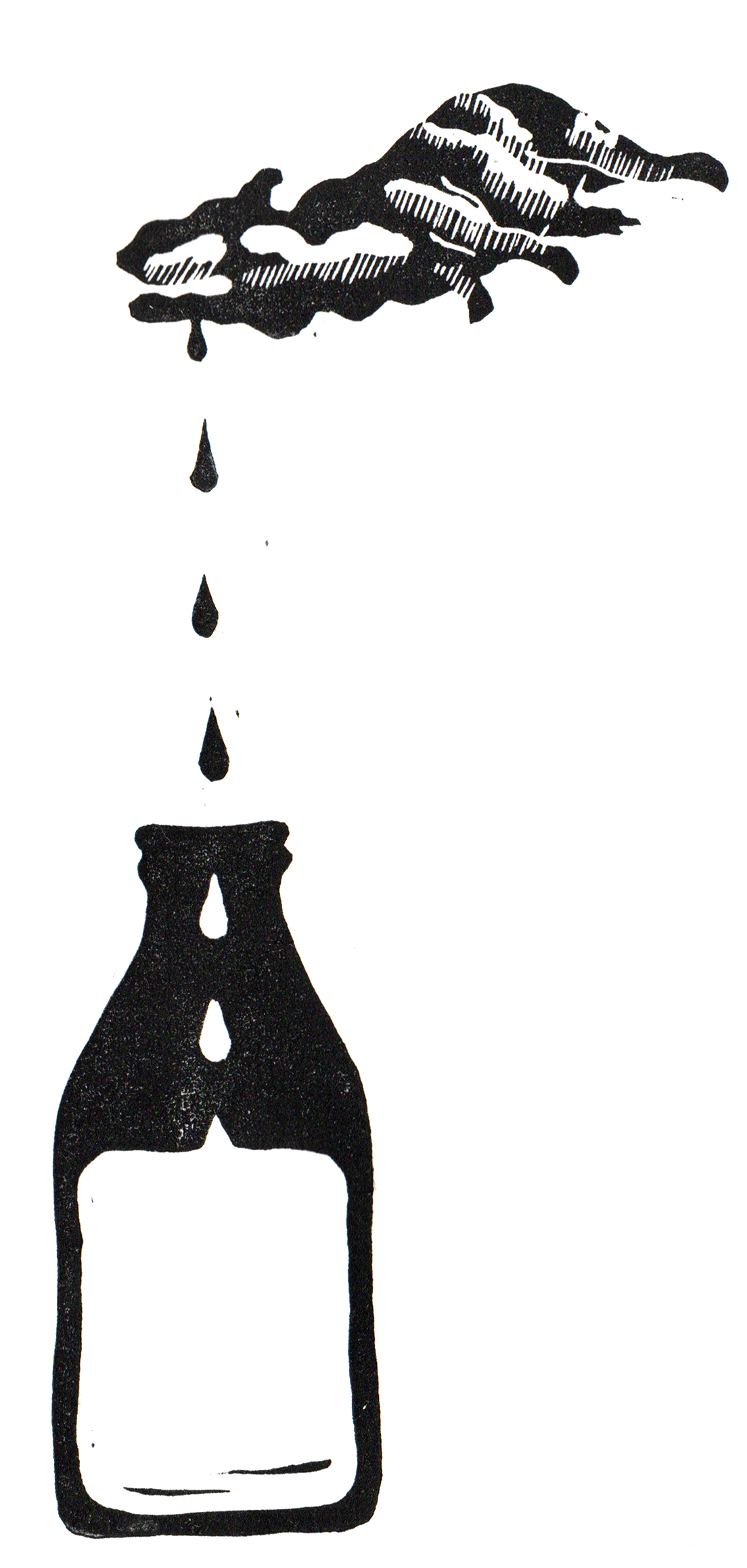
How do we reconcile feminist principles with our participation in the exploitation of the non-human female body?
Dissecting ‘speciesism and sexism’
Living as a queer person outside rigid normative structures has profoundly shaped my understanding of bodily autonomy and self-sovereignty. This lived reality connects deeply to the experiences of (trans) women. Navigating a society that routinely seeks to categorize, restrict, and exploit vulnerable bodies makes the systemic violence inflicted upon non-human females intimately and acutely personal to you and me. This shared logic of regulation calls on feminists and queer activists to recognize our common cause and rise together in radical solidarity.
The patriarchal mechanisms that monitor and restrict human gender, sexuality, and bodily agency spring from the exact same foundational ideology as the industrial exploitation of female animals: both frameworks view sentient bodies not as autonomous, self-sovereign beings, but as instruments to be owned, harvested, and subjugated for power and profit.
In opening with the line, "From the steel-barred stall where the dairy-mother weeps," the poem places the continuous suffering of the non-human female directly at the center of systemic violence. Across species, female bodies bear an immense and unique burden under these oppressive frameworks. By dissecting this line, we expose how the subjugation of female animals in industrialized food production is inextricably bound to the very same apparatus of control that patriarchy employs to govern human bodies.
Consider the life of a cow reduced to a "dairy-mother" - a designation born entirely of human engineering and commercial demand. In nature, no such animal exists, nor does any other species consume another's milk into adulthood. She is systematically bred, subjected to repeated artificial insemination, and forced into continuous cycles of gestation, only to endure the traumatic, immediate loss of her newborn calves. Sustaining this artificial market requires a violent machinery of reproductive coercion and physical confinement. For anyone who has felt their physical selfhood or reproductive freedom weaponized by normative systems, this forced extraction of body and labor echoes as a terrifyingly familiar parallel.
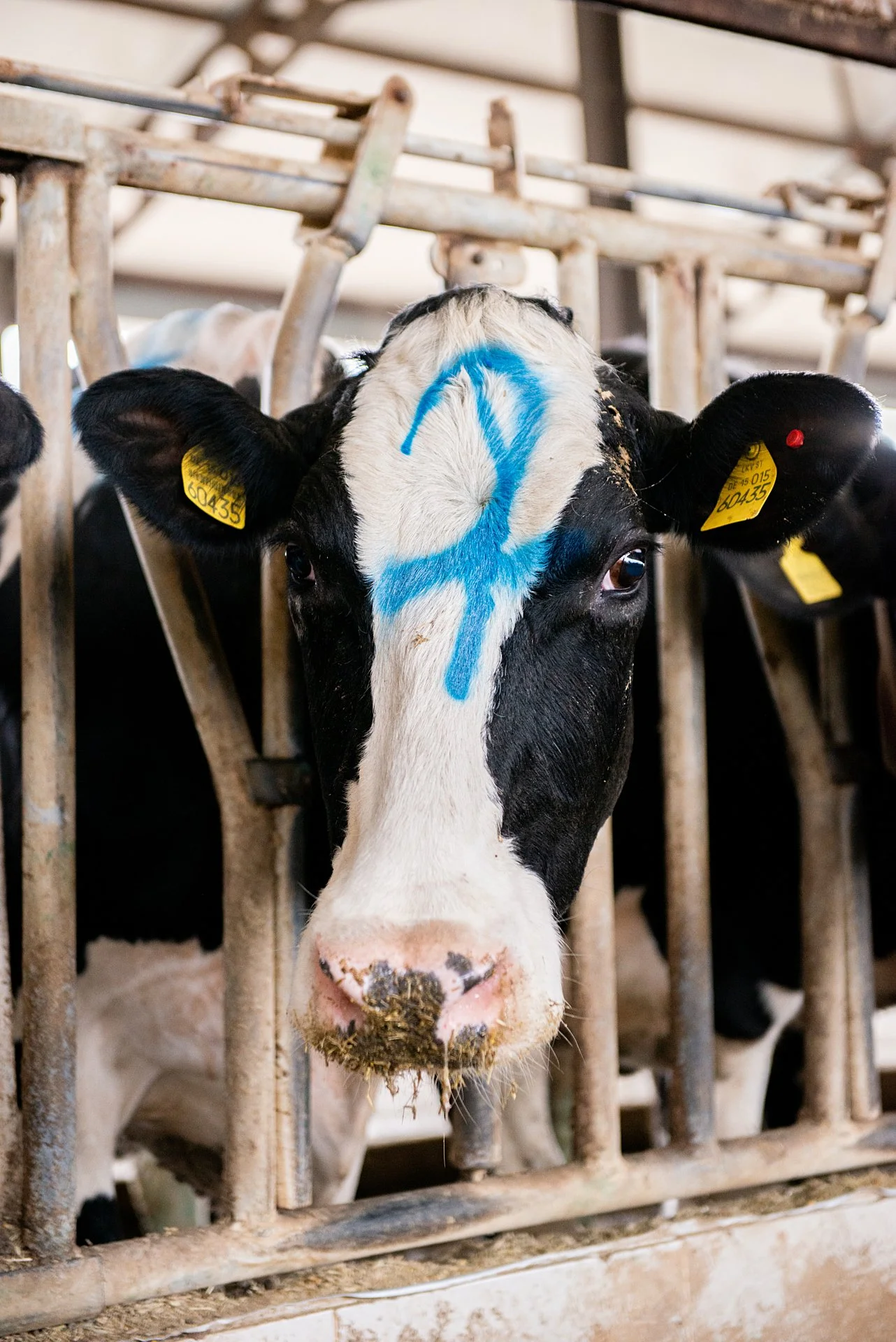
Havva Zorlu / We Animals
The poem forces us to recognize that the cage of steel bars and the historical constraints of patriarchy are two sides of a single, brutal architecture of control.
This systematic violation of a living being’s reproductive cycles, offspring, and physical integrity illustrates the foundational logic uniting patriarchy and factory farming: stripping a sentient being of agency. However, the exact nature of this subjugation manifests with distinct nuances across species. For women and queer people under patriarchy, control operates through socio-legal regulation, bodily surveillance, and societal ownership. For non-human animals, this logic is pushed to its absolute extreme - reducing their very existence to industrial economic utility, commodity status, and raw material like flesh, wool, milk, and skin.
Widespread detachment from agricultural realities enables the dairy industry to operate largely unchallenged. In many modern societies, over half the population remains unaware that cows, like human mothers, must give birth to produce milk. This ignorance fosters the misconception that dairy farming is benign or necessary for animal welfare, much like the myth that sheep must be shorn because of artificial overproduction. In truth, these animals have been selectively bred into fragile, hyper-productive bodies solely for human consumption - a system of genetic manipulation and exploitation that must be stopped and dismantled.
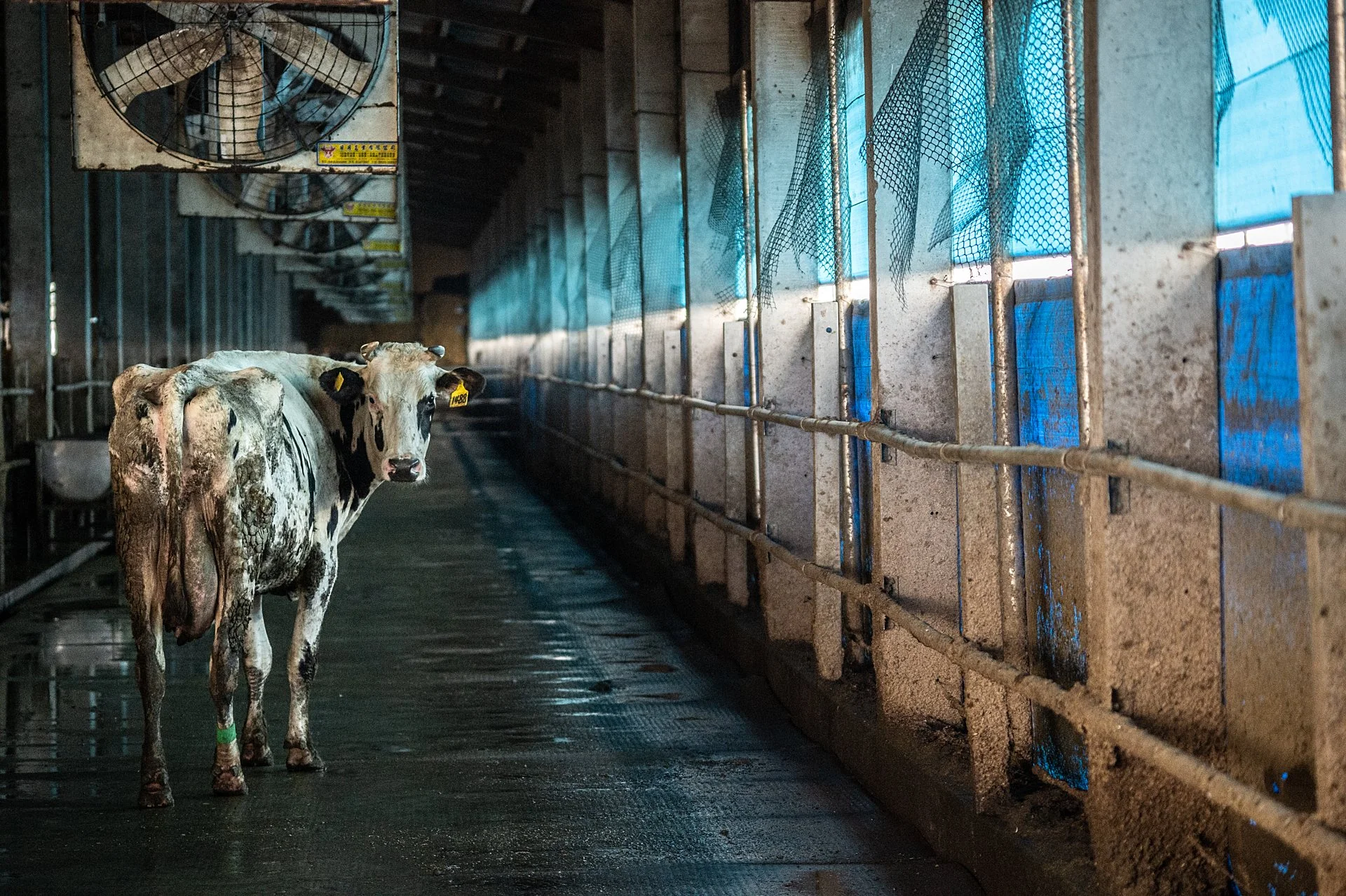
A cow on a dairy farm. Taiwan, 2019. Jo-Anne McArthur / EAST / We Animals
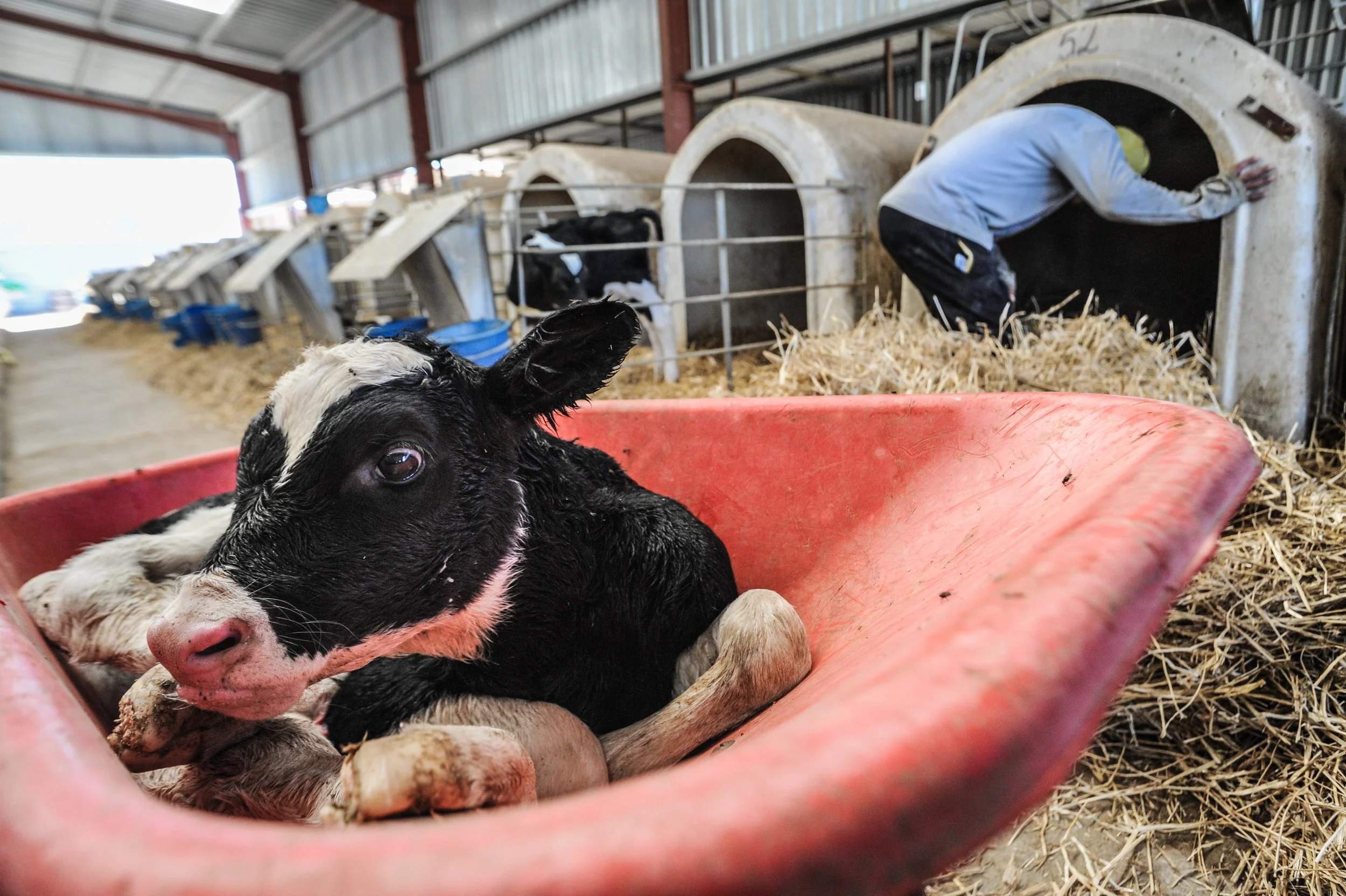
Still wet from birth, a newborn calf at a dairy farm lies in a wheelbarrow before being wheeled away from her mother and put into a veal crate at a dairy farm. Spain, 2010. Jo-Anne McArthur / Animal Equality / We Animals
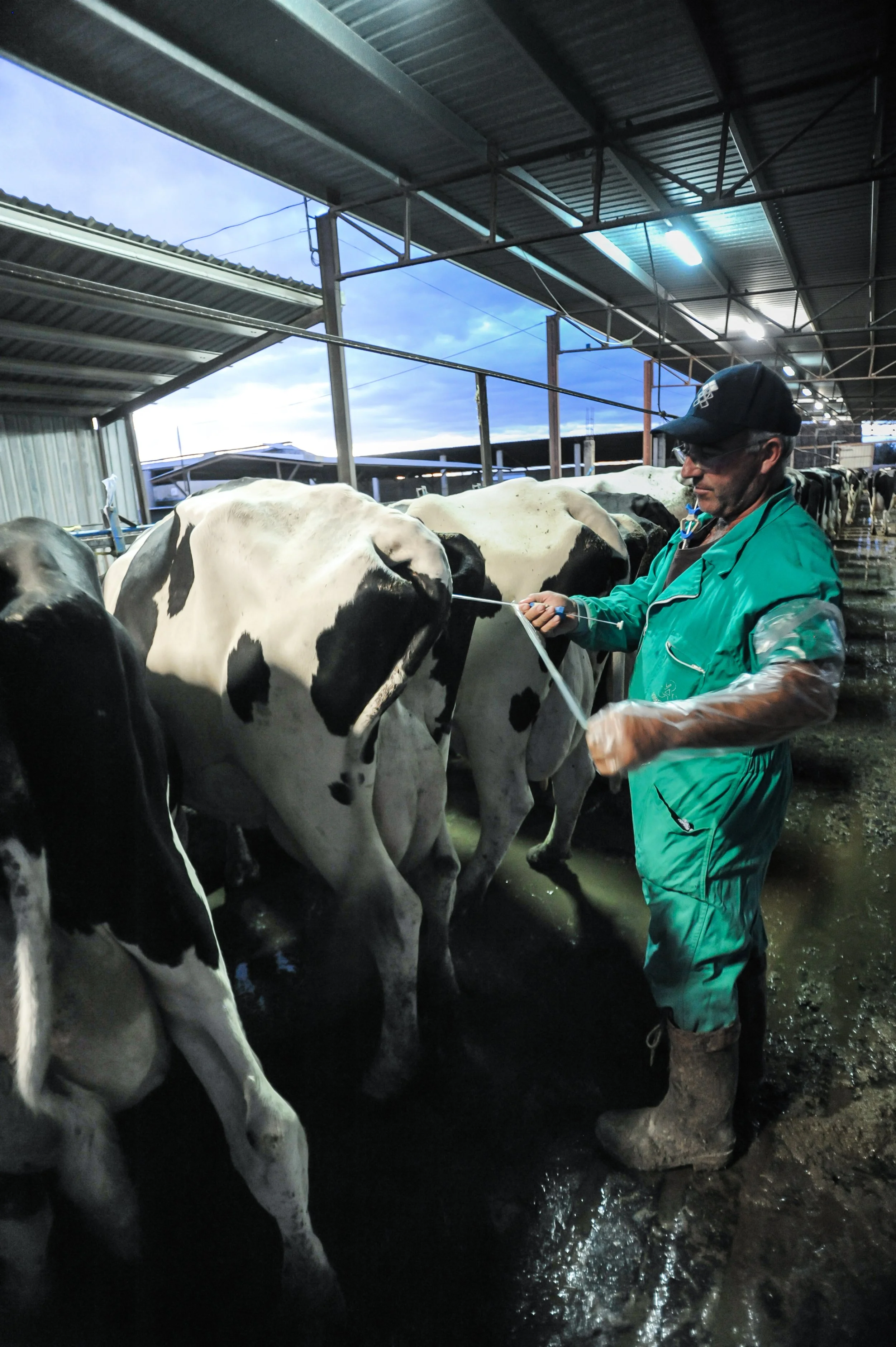
A cow is artificially inseminated at a dairy farm by a farm staff member. Spain, 2010. Jo-Anne McArthur / Animal Equality / We Animals
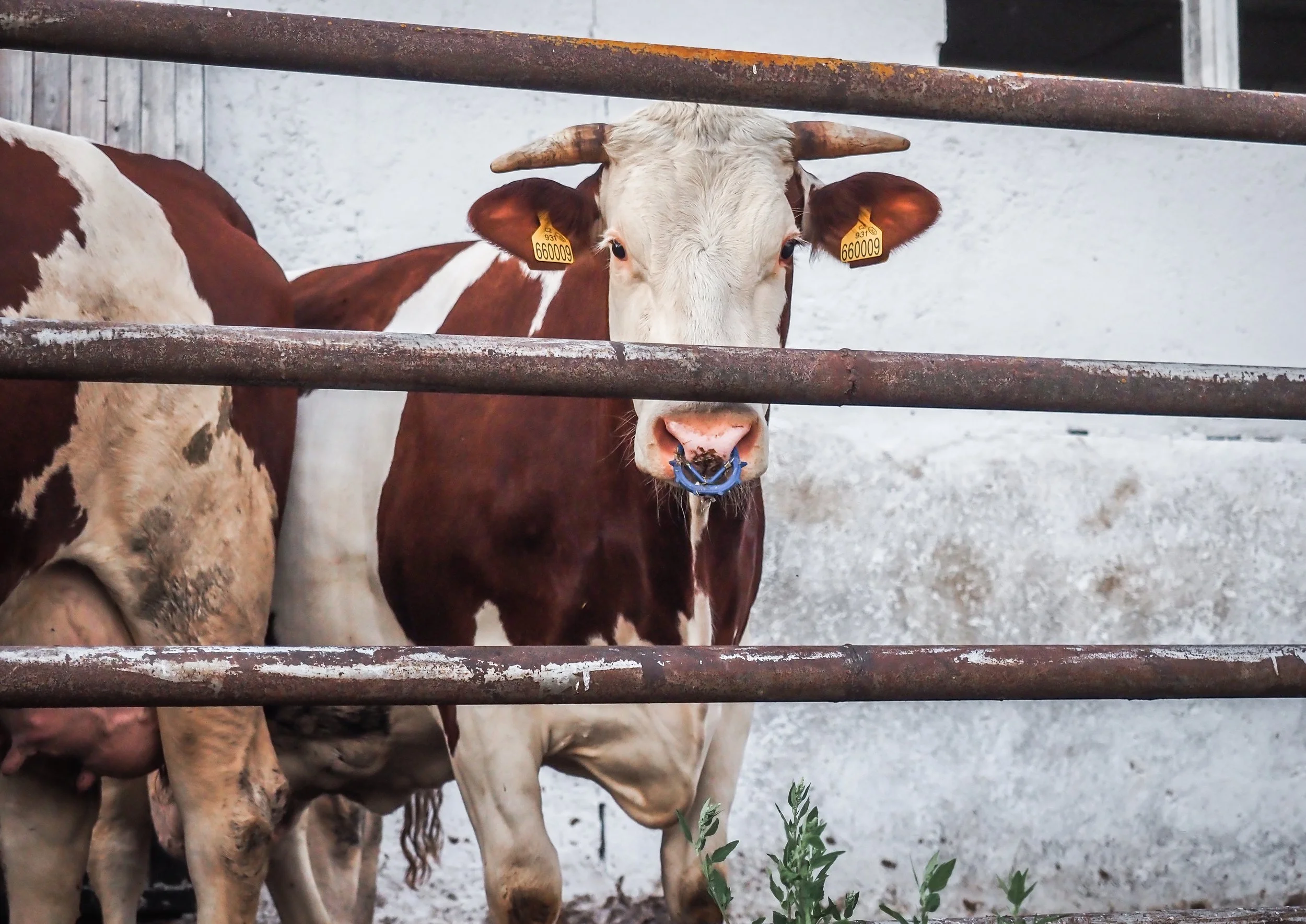
A cow with a spiked nose ring looks out from her enclosure on a dairy farm in Czechia. This style of nose ring prevents cows (usually calfs) from drinking the milk from the udders of other cows. Czechia, 2020. Lukas Vincour / Zvirata Nejime / We Animals
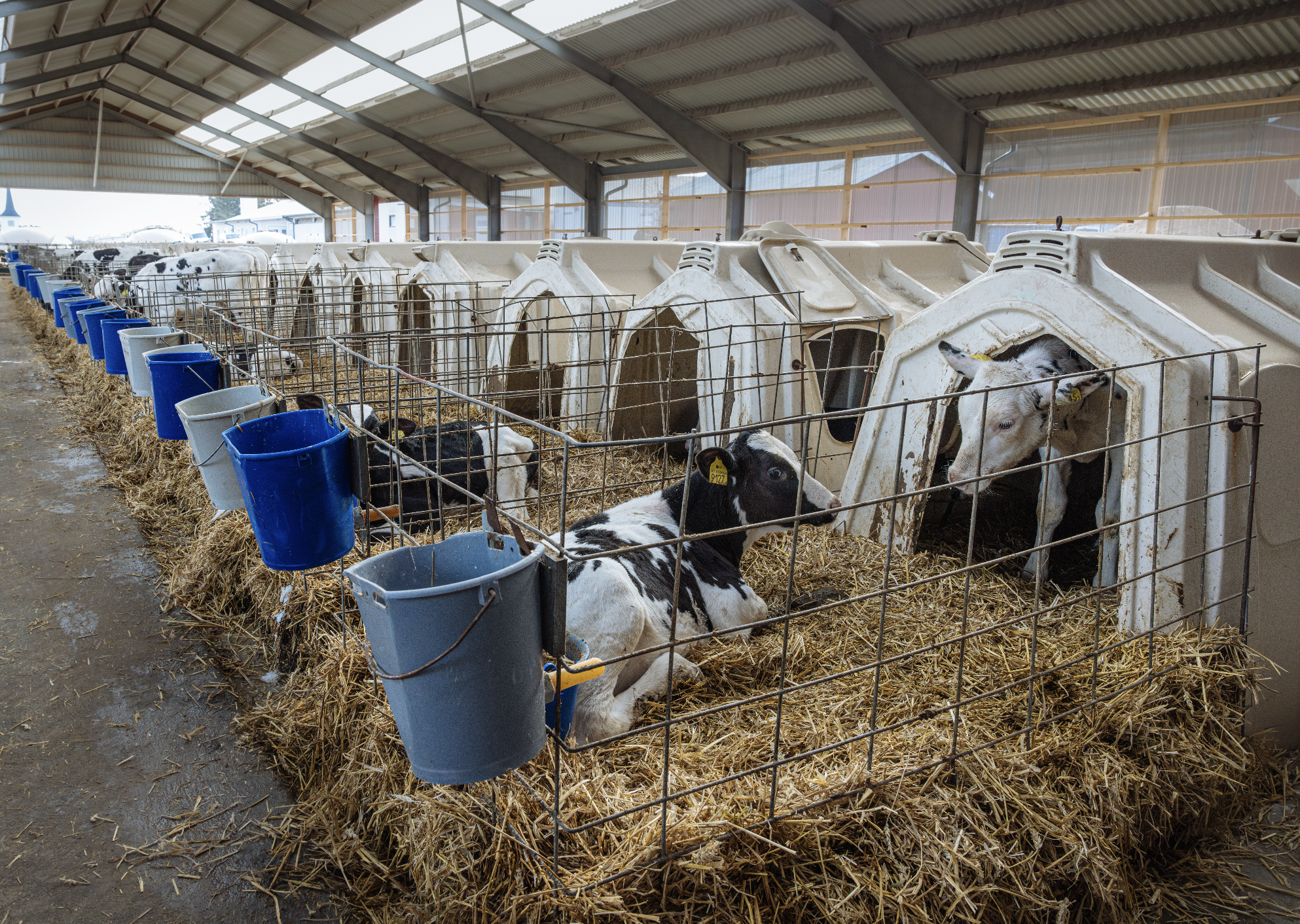
Young calves, separated from their mother shortly after birth, live in a row of small pens with hutches at a dairy farm. Sweden, 2025. Noah Marsten / Djurrattsalliansen / We Animals
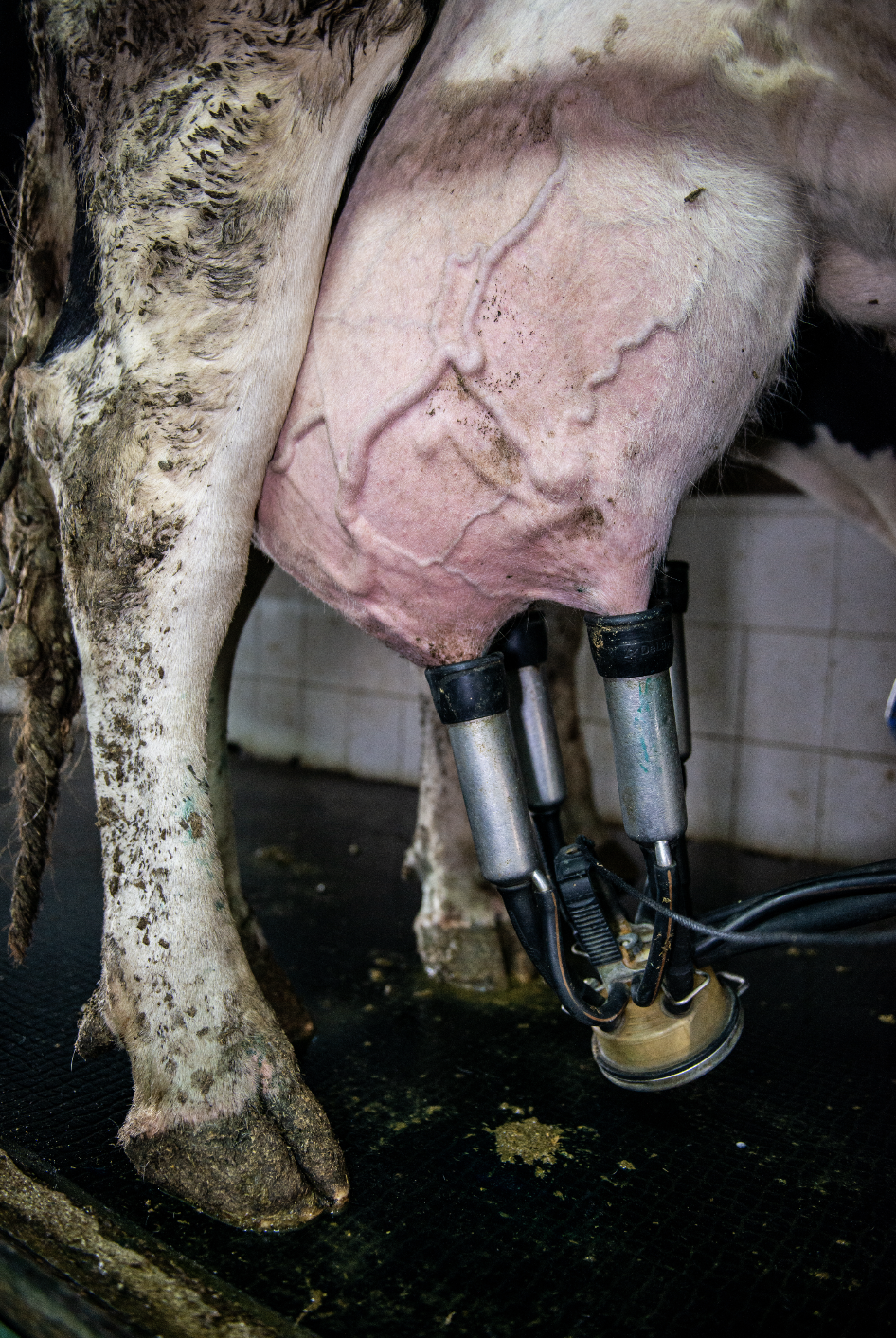
The teat-cups of a milking machine hang attached to a cow's udder at a dairy farm. The vacuum suction of milking machines and programs in place on dairy farms to increase milk production cause the udders of dairy cows to grow abnormally large. Torbali, Turkiye, 2022. Havva Zorlu / We Animals
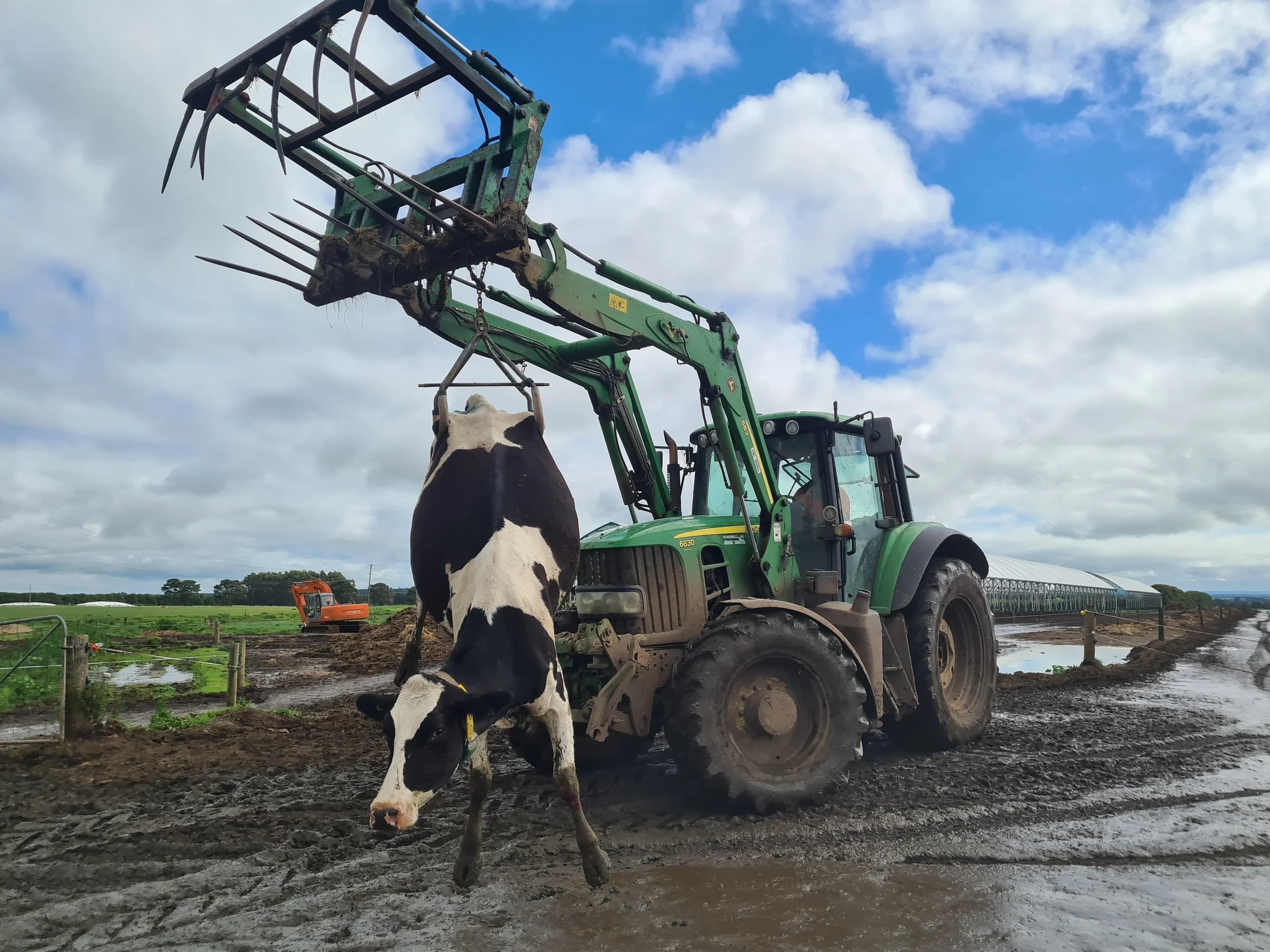
A Friesian dairy cow no longer able to stand or walk dangles from a tractor bucket as she is carried away to a shed at a dairy farm. Undisclosed location, Victoria, Australia, 2022. Louise Delagnes / We Animals
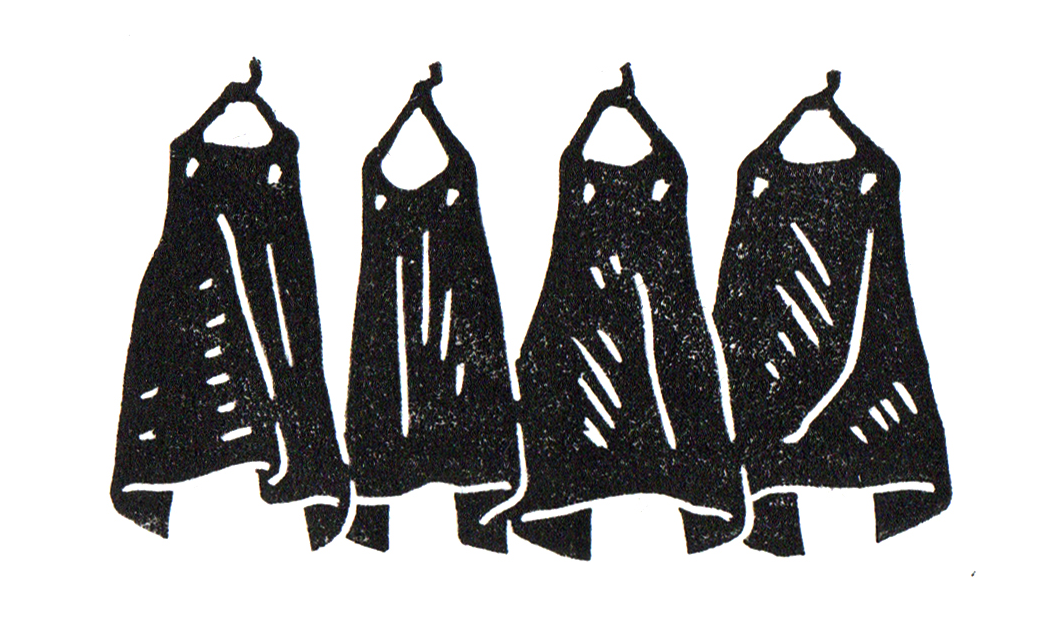
Dissecting ‘speciesism and classism’
As an animal defender, it is far too easy to focus our moral outrage solely on the individual holding the knife on the immediate, visible actor of violence. But a truly critical, anti-speciesist analysis demands that we look beyond the single hand to examine the architecture of the system itself. Economic frameworks under modern capitalism trap vulnerable human populations in cycles of systemic exploitation, leaving them with no viable path for survival. From the thousands of workers enslaved on distant ocean trawlers to the underpaid, deeply traumatized laborers on the assembly line of the slaughterhouse, these individuals are not the masterminds of oppression - they are its frontline agents. They are coerced into performing violent labor for a profit engine that views both human and non-human lives as entirely expendable fuel for market growth.
In my poem, I confront this economic violence directly in the second stanza: "To the high-speed line where the weary worker sleeps." Here, I target the relentless speed of modern processing lines - a pace designed strictly to maximize profits at the expense of safety, human dignity, and life itself. Henry Ford famously noted that the assembly line was inspired by the trolley systems of Chicago slaughterhouses. When I evoke the image of the "weary worker" collapsing in sleep beside the line, I am describing the profound physical and mental exhaustion forced on workers when capitalism pushes human bodies far past their limit.
I want to show that the core operational mechanism uniting speciesism and classism is disposability. Under a profit-driven engine, both the non-human animal and the low-wage worker are reduced to interchangeable parts. The animal's body is commodified into meat, while the worker's body is consumed by dangerous, high-stress labor. When a worker is broken or injured by the line's pace, or when an animal is slaughtered, the system simply replaces them. Neither is recognized for their inherent worth; both are treated as expendable fuel for market expansion.
Furthermore, I expose how industrial agriculture relies on deliberate concealment to maintain consumer compliance. High-speed slaughterhouses are hidden from public view, and corporate marketing sanitizes the reality of the killing floor. By actively insulating consumers from the violence inflicted on both animals and workers, the system ensures that society remains complicit in this cycle of exploitation without ever having to confront its true human and non-human cost.
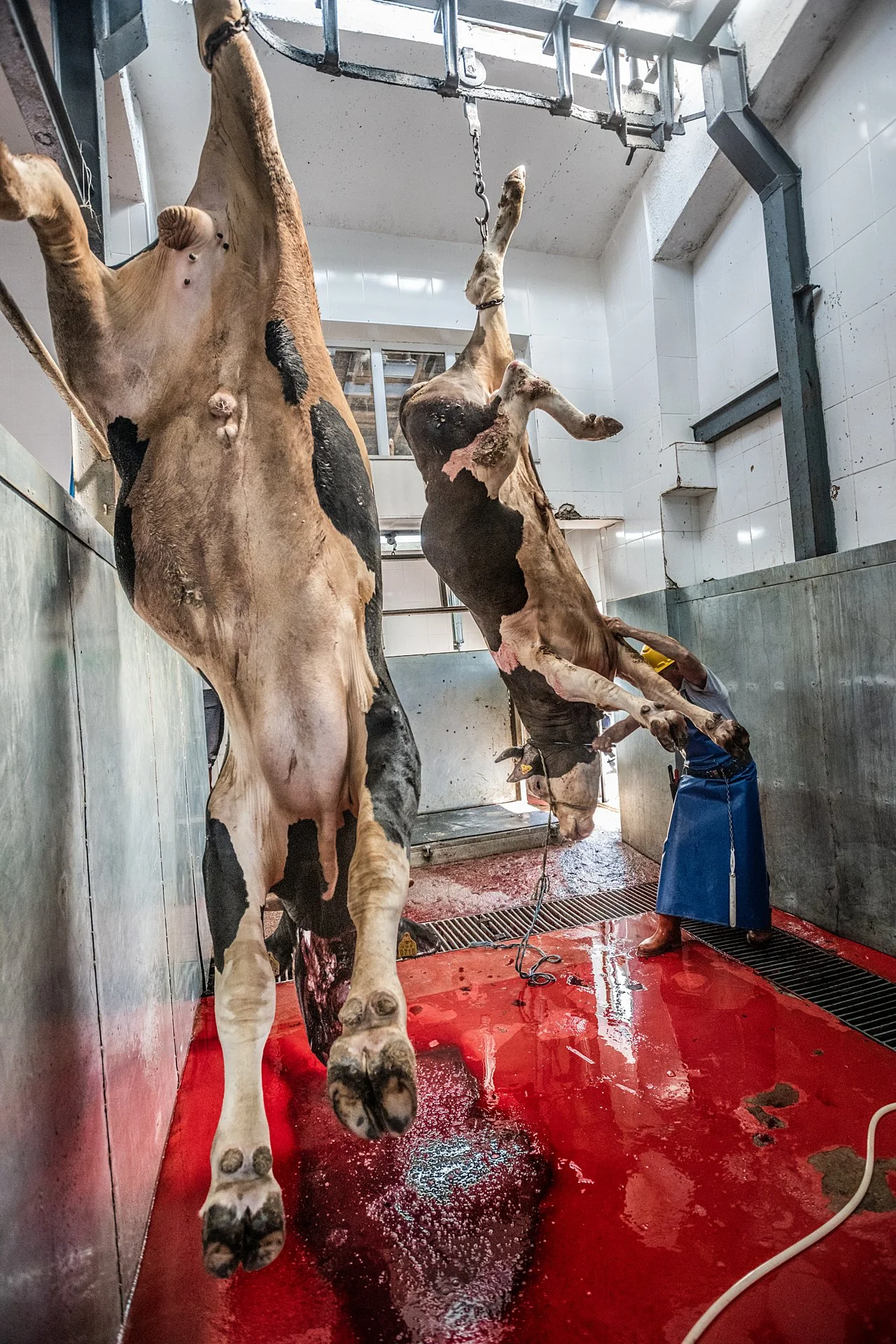
Bull bleeds out while worker slhis the throat of another steer at a slaughterhouse. Turkiye, 2018. Jo-Anne McArthur / Eyes On Animals / We Animals
The weary worker and the silenced animal are bound by the same capitalist logic: both are treated as disposable inputs in an engine of profit, hidden away from public view.
Does this absolve individual slaughterhouse workers who commit extreme acts of violence? Absolutely not. But when you subject people to relentless line speeds in high-stress, desensitizing environments, it creates a volatile dynamic where confusion and fear lead to cruel attempts at control - whether over one another or over the non-human animals in their hands. Beyond the slaughterhouse floor, studies consistently show that this severe, daily psychological trauma spills over into local communities, correlating with higher rates of violent crime and domestic abuse. It is a sobering reminder of how labor exploitation and speciesist violence jointly degrade human and non-human lives alike.
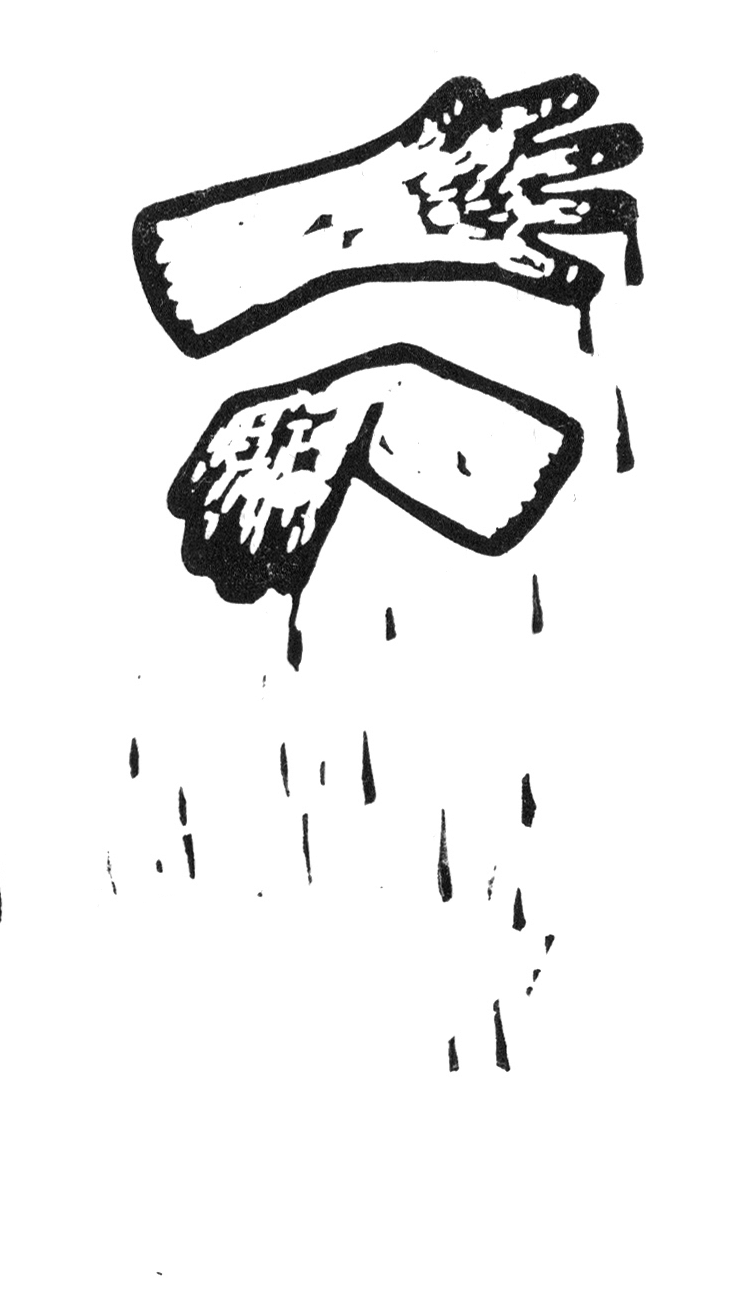
To what extent is the consumer complicit in this architecture of exploitation?
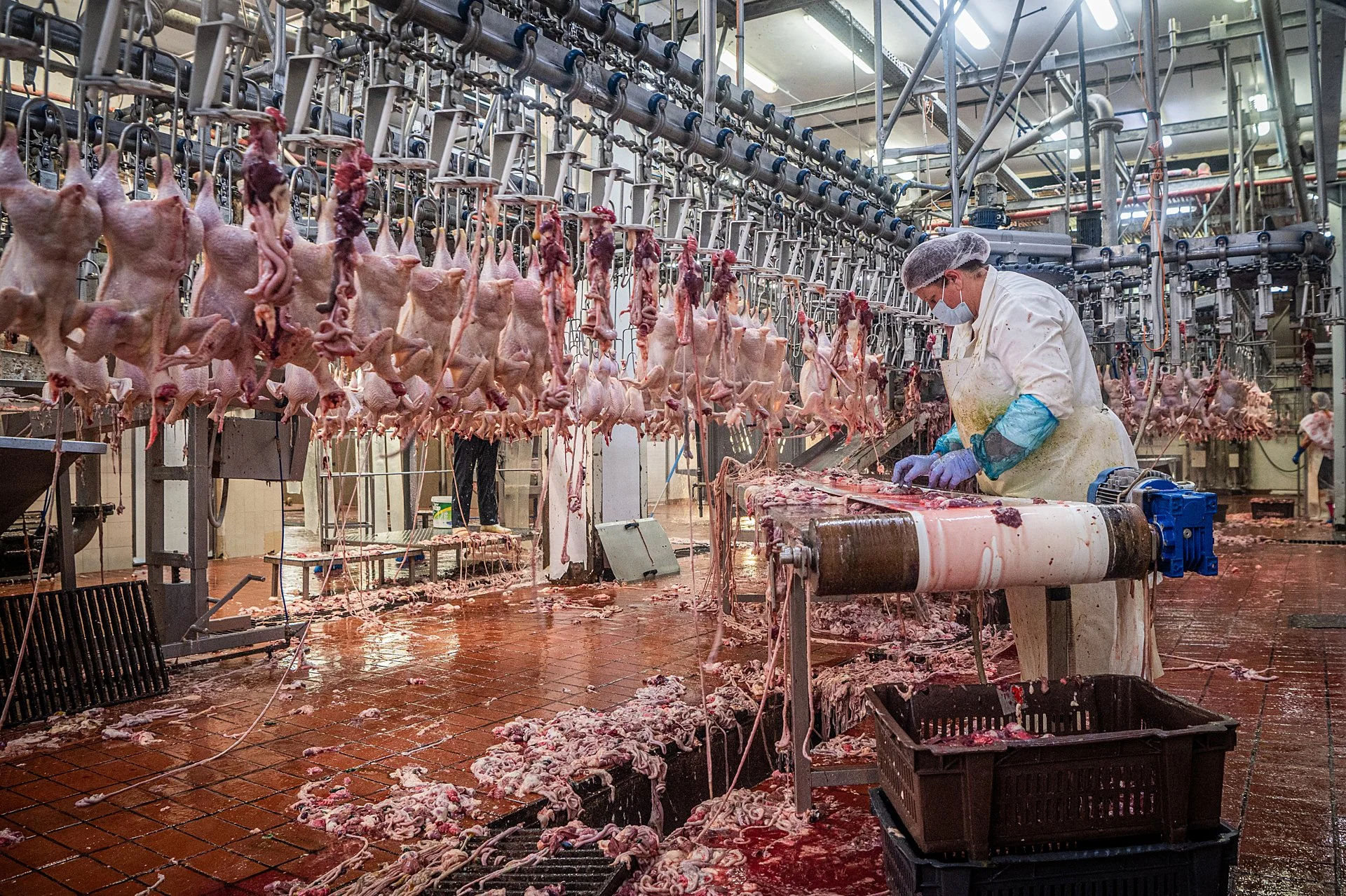
A Greek chicken processing plant worker removes slaughtered chickens' internal organs and places them on a mechanized conveyor belt. This facility can process up to 10,000 birds daily and supplies supermarkets nationwide. Greece, 2022. Milos Bicanski / We Animals
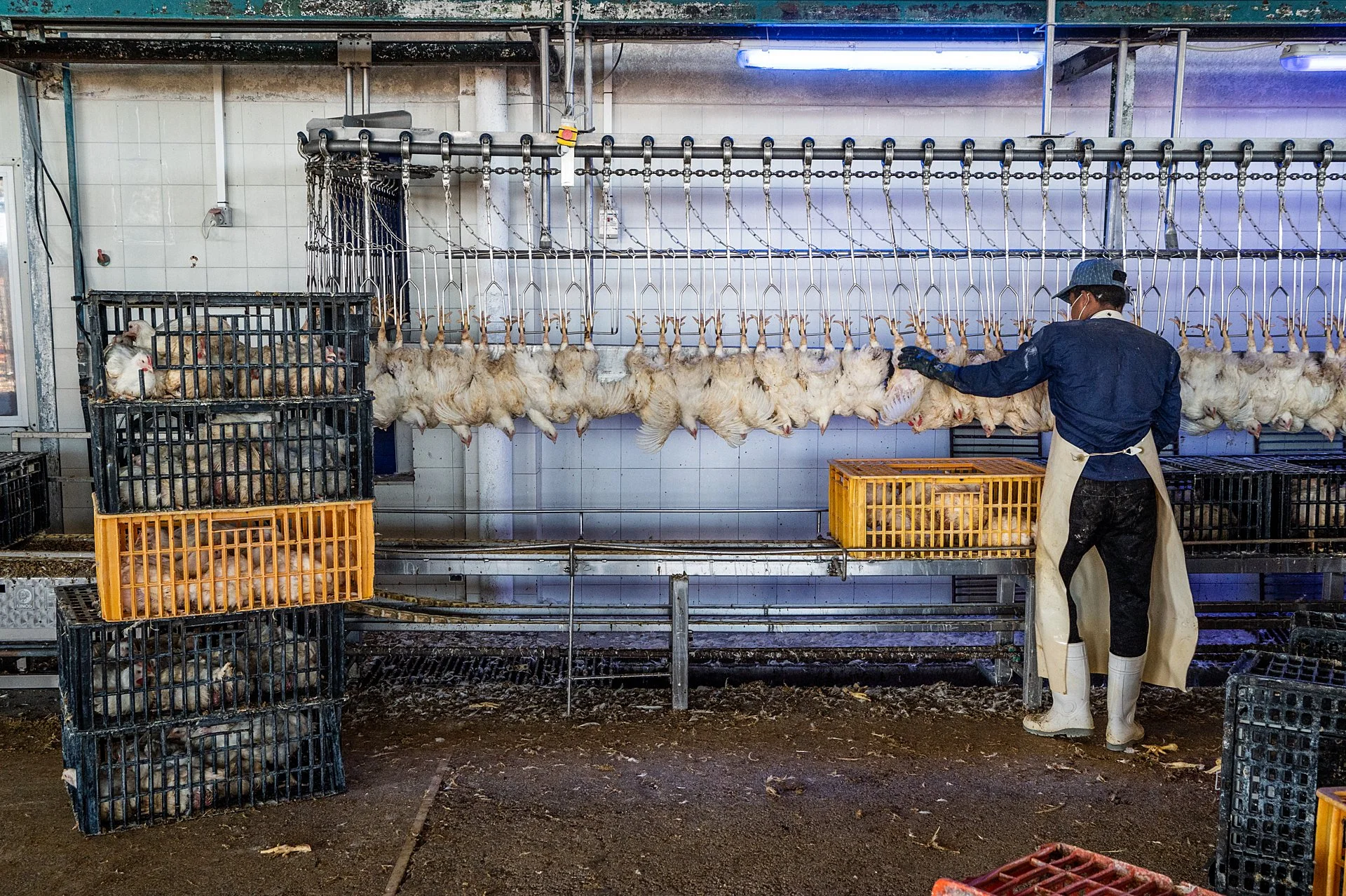
Live chickens hang shackled upside down on a processing line at a Greek chicken slaughterhouse as a worker prepares them to be killed. This facility can process up to 10,000 birds daily and supplies supermarkets nationwide. Greece, 2022. Milos Bicanski / We Animals
Dissecting ‘speciesism and racism’
In the third stanza, I move to unweave another deeply entrenched dimension of structural power: "A single, vast white canvas is spread." Here, I address how speciesism intersects with the stark mechanics of systemic racism. At their root, both systems rely on a shared ideology of domination: the belief that certain bodies exist merely to be owned, controlled, and extracted as resources for a dominant group. Just as racial oppression historically devalues human lives by reducing them to economic instruments, speciesism treats non-human animals as mere commodities stripped of selfhood and intrinsic worth.
The "white canvas" speaks directly to this dominating worldview - a structural framework imposed onto society that dictates whose lives hold value and whose are treated as disposable. When Peter Singer popularized the term speciesism, he highlighted its alignment with racism and sexism, showing how each framework privileges the dominant group while marginalizing all others. But for me, this connection is not just a theoretical model. As I look at the meat processing industry today, I see how racialized economic precarity is actively weaponized to sustain the industrial slaughter of non-human animals.
While corporate entities maintain control over land and profits, the most dangerous, traumatizing, and physically degrading labor is systematically shifted onto vulnerable migrant and immigrant communities. Across slaughterhouses in Europe and beyond, an estimated 70% of the workforce consists of migrant workers, many funneled through predatory agencies, paid sub-minimum wages, and denied basic social protections or healthcare. They are forced to work at punishing line speeds under unsafe conditions, handling thousands of animal bodies every day. This is how the system operates: it leverages the vulnerability of racialized labor to keep the slaughter line moving while shielding corporate power from accountability.
How do systemic racism and speciesism reinforce one another in industrialized labor?
Unweaving this stanza forces us to confront the fact that environmental hazards, exploitative labor, and animal slaughter are concentrated within the same system of racialized disposability. By treating both non-human animals and marginalized human laborers as expendable inputs, industrial animal agriculture sustains a shared architecture of violence. Recognizing this connection demands that our fight against speciesism also be a fight against systemic racism and corporate exploitation.
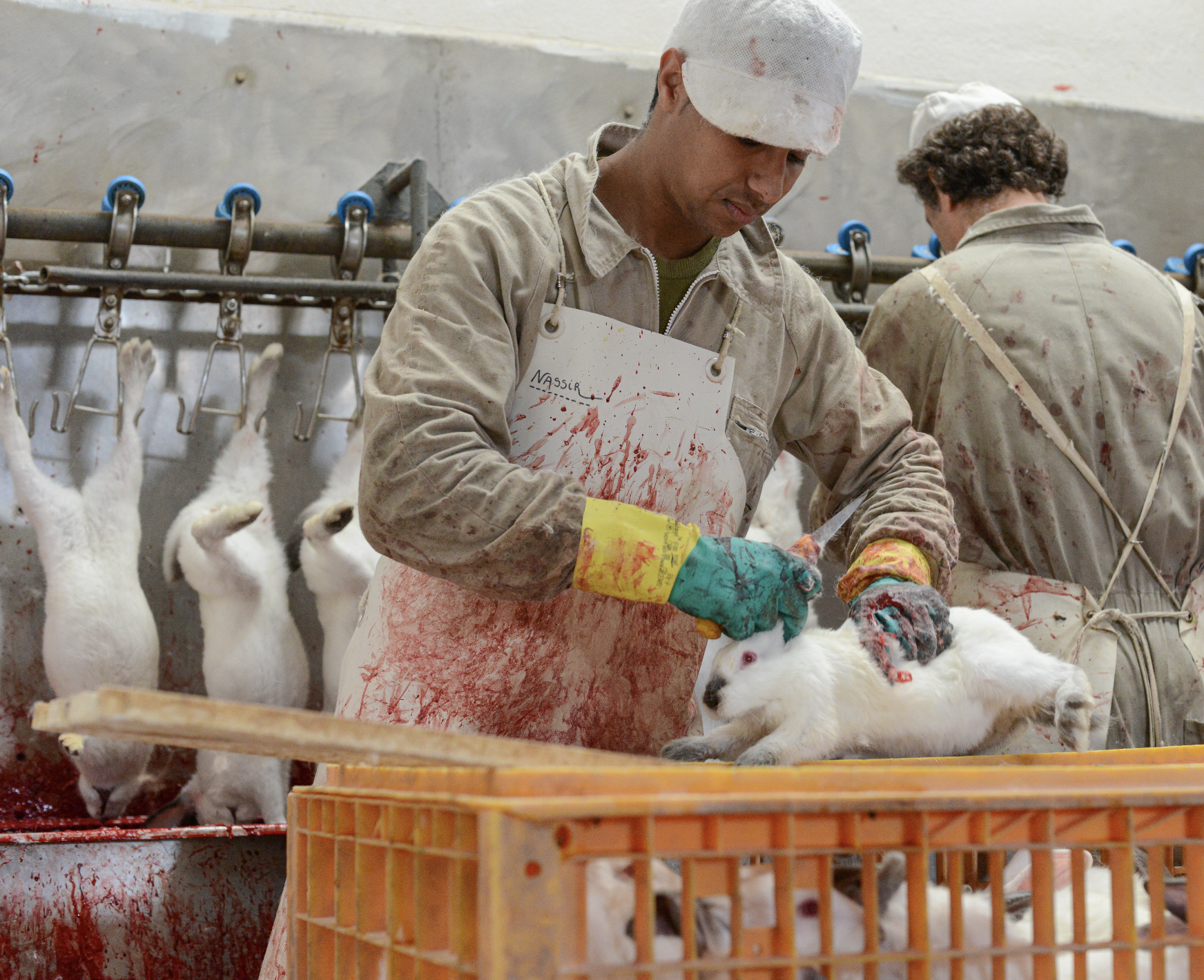
A rabbit is held by their ears and pinned down for slaughter by a worker at a rabbit slaughterhouse. Dying rabbits bleed out from a processing line in the background. Spain, 2013. Jo-Anne McArthur / Animal Equality / We Animals
The "white canvas" exposes how corporate power leverages racialized labor precarity to sustain the daily violence of the slaughterhouse floor.
Dissecting ‘speciesism and colonialism’
While the previous sections dissect the poem's explicit lines, its underlying architecture demands that we confront the deep, historical entwining of speciesism and colonialism. For many, this connection is not abstract theory but a lived, ongoing reality. At their core, both systems are driven by the same arrogant and violent logic: the belief that living beings and the Earth itself exist merely as property to be claimed, dominated, and extracted for profit.
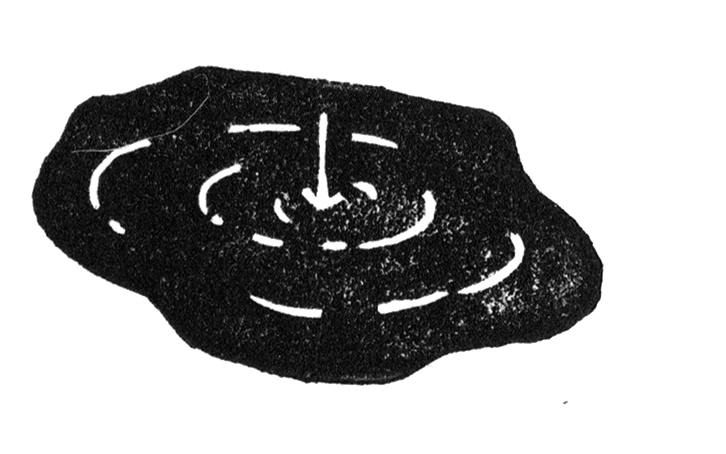
The entire modern, industrialized food system, which is premised on the intensive killing of animals and the exploitation of labor, is built upon a colonial framework.
Colonialism historically justified the violent conquest of lands, the brutal subjugation of Indigenous peoples, and the theft of natural resources under the banner of ownership and dominion. Speciesism applies this exact same oppressive template to non-human life, reducing sentient animals and vital ecosystems to disposable commodities stripped of intrinsic value.
When we examine these twin forces, we see that the modern industrialized food system is not simply a commercial enterprise, but a direct, continuous extension of colonial conquest. Crucially, this system enforces a dangerous separation between 'us' and 'the environment,' a foundational myth we must reject: we are not separate from nature, we are nature. The fight for the land is, therefore, the fight for ourselves. Today, global animal agriculture perpetuates this ongoing colonial violence through several destructive mechanisms:
Global land grabs: Driving massive deforestation and land theft to cultivate monocultures for feed for farmed animals, forcibly displacing Indigenous communities and severing their sacred relationships with ancestral soil.
Exporting violence: Establishing polluting, high-stress slaughterhouses and mega-farms in vulnerable communities, offloading the ecological devastation and trauma onto those with the least political power.
Enforcing Western dominance: Imposing a Western, meat-heavy diet and a dairy- or milk-oriented society as the global standard of prosperity, which actively erases and marginalizes sustainable, plant-centered Indigenous food traditions.
By unweaving this stanza, we uncover how our global food system serves as an uninterrupted engine of colonial power. It treats the land, non-human animals, and marginalized peoples as expendable fuel for corporate profit. To break these chains, we must dismantle the myth of human separation from the natural world and recognize that liberation for the land, the animal, and the human are indivisible.
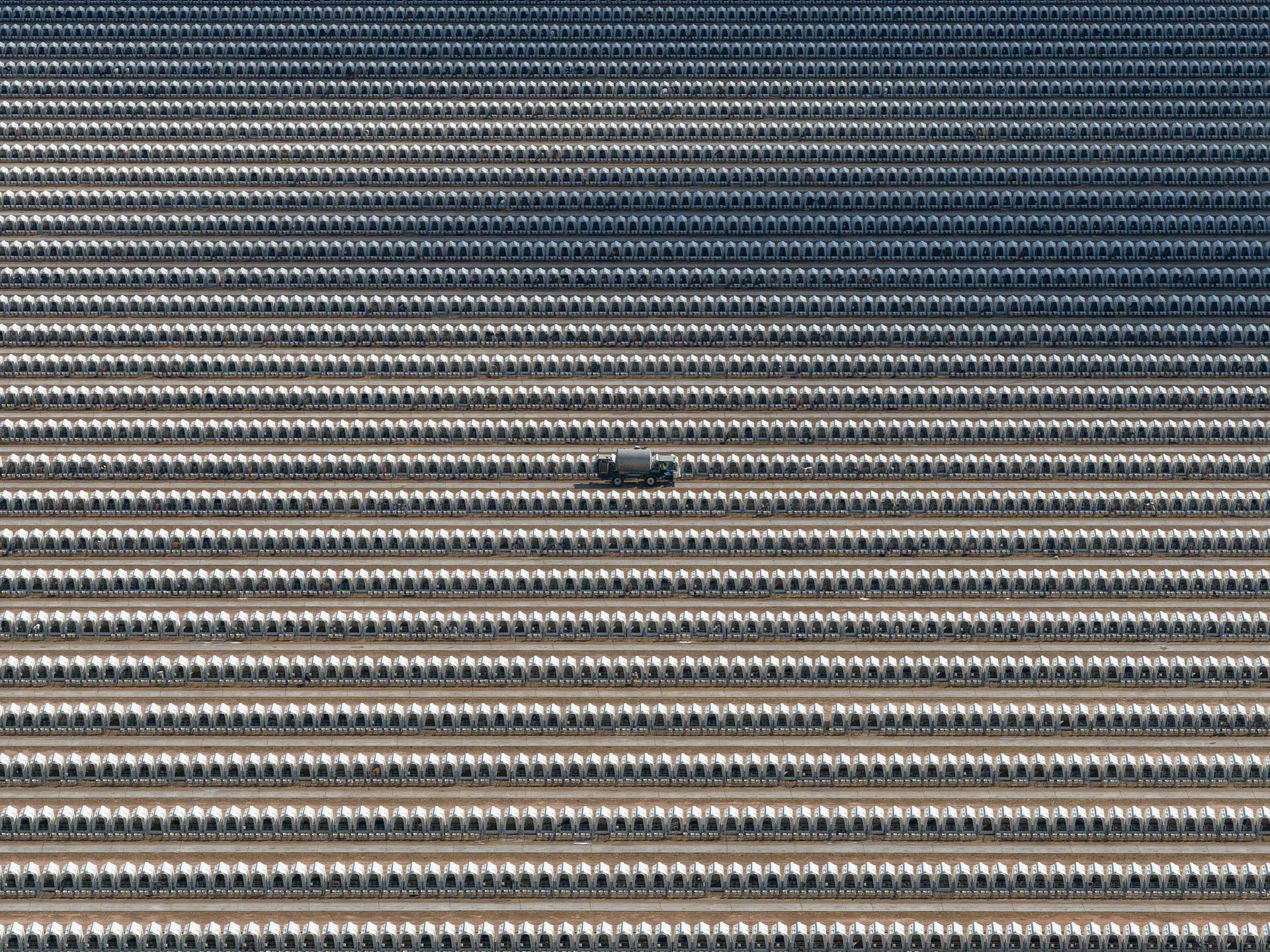
A milk dispenser truck drives between some of the thousands of calf hutches in a massive dairy farm's yard. Turkey Creek Dairy, Pearce, Arizona, USA, 2023. Ram Daya / We Animals
We see that the modern industrialized food system is not simply a commercial enterprise, but a direct, continuous extension of colonial conquest.
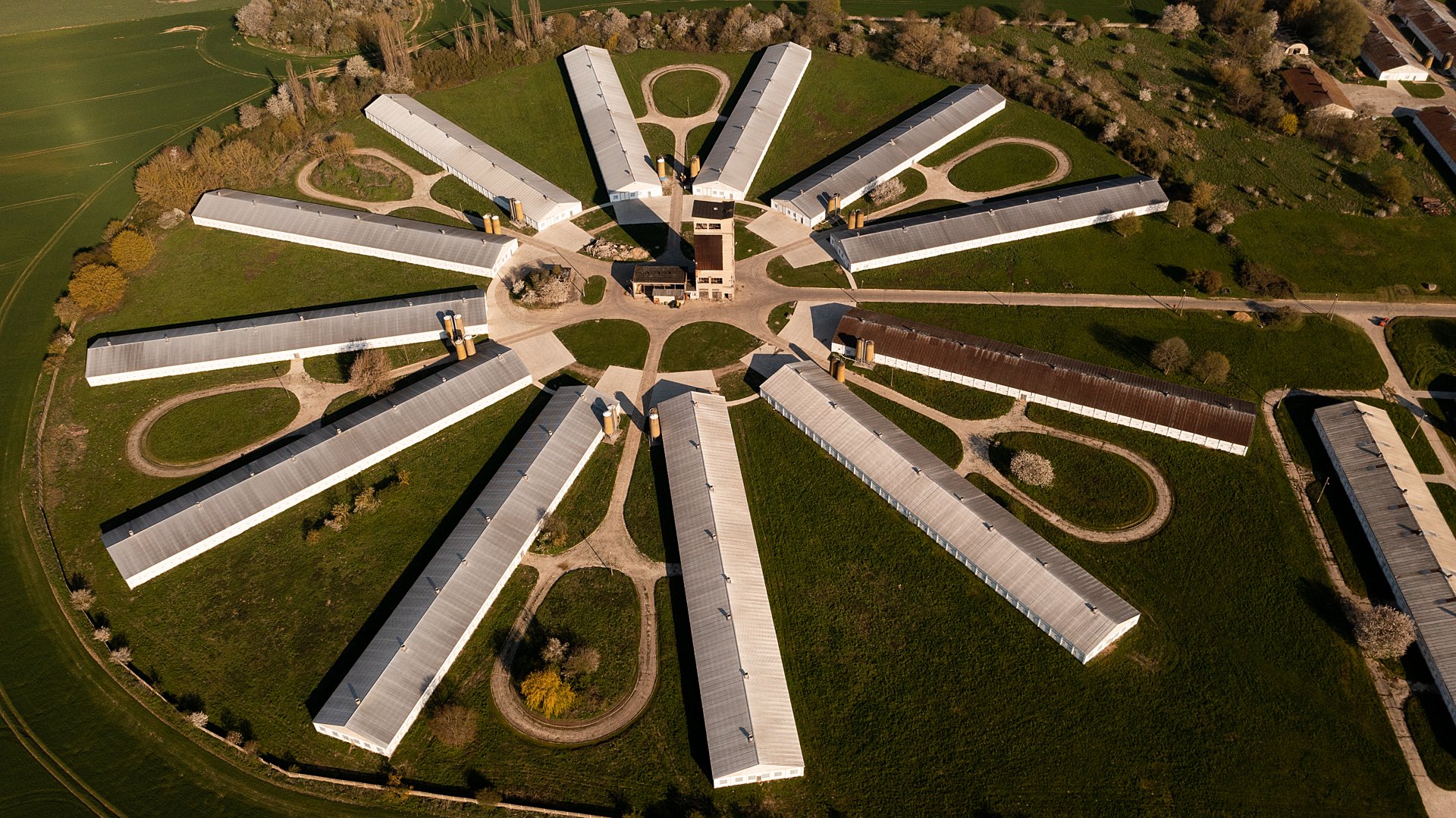
Chickens and turkeys are raised in multiple long sheds at this large poultry facility covering several hectares and located near residential buildings. According to the photojournalist, the facility holds an Integrated Environmental Permit, which the country requires for installations deemed to significantly pollute the environment. The facility has also attracted the attention of an anti-factory farming coalition as an example of the local impacts of such operations. Undisclosed location, Kolbacz, West Pomeranian Voivodeship, Poland, 2020. Andrew Skowron / We Animals
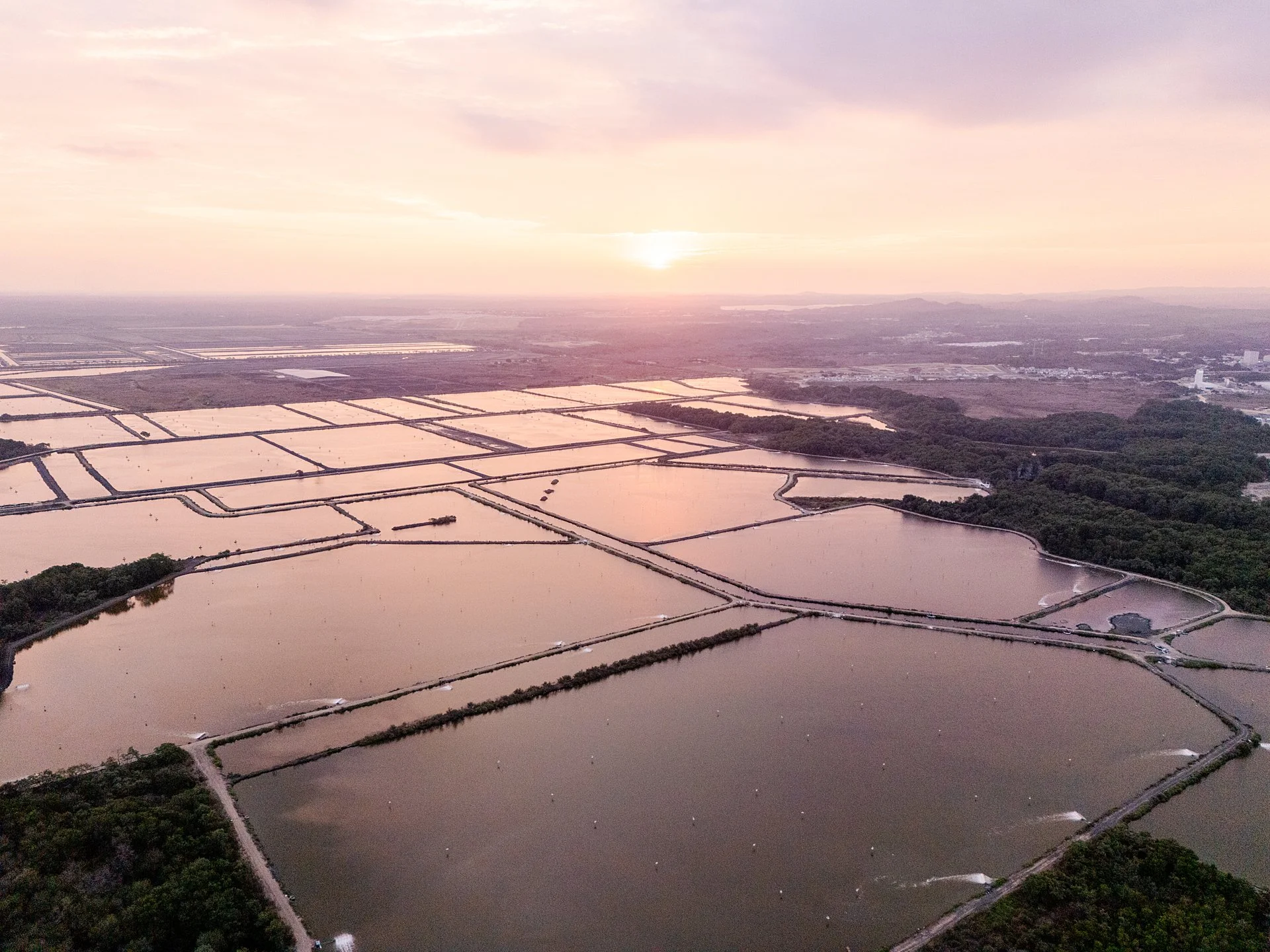
Mangroves and large shrimp farms stretch across coastal estuaries in one of Ecuador's major shrimp-producing regions. Undisclosed location, Guayaquil, Guayas Province, Ecuador, 2025. Marcos Zegers / Animal Welfare Observatory / We Animals
The ultimate challenge of this dissection is not merely to trace the threads of violence, but to pull them.
Dissecting these verses isn't just an academic exercise; it is an unravelling of the daily violent logic that shapes our world. As an anti-speciesist activist, every thread I have pulled - from the dairy-mother's confinement to the exhausted slaughterhouse worker, the racialised precarity of migrant labor, and the ongoing colonial theft of land - points back to one inescapable truth: we are confronting a single, interconnected machine of domination built on disposable life.
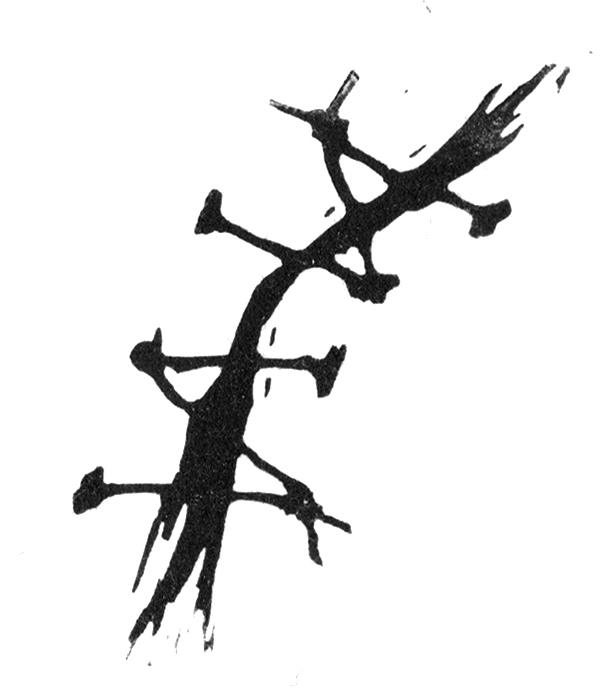
"All Threads, One Loom" is my personal call to action. It demands that we tear down the artificial walls dividing us and recognize that every act of resistance - for the caged animal, the exploited laborer, and the exploited earth - is a vital strike against the same wheel of power. Together, with outrage and love, we hold both the mandate and the power to unweave the loom and claim our total freedom.
I hold firmly to the belief that most people strive to live ethically, and that conviction is what fuels my activism. But seeing the loom means accepting the responsibility to unweave it. We can no longer afford the luxury of ranking our struggles or treating human and non-human liberation as competing causes. Our shared liberation is forged in the fight, and dismantling this architecture requires an uncompromising, radical solidarity across every movement for justice.
This is not just a call for empathy; it is a declaration that every act of resistance - for the vulnerable animal, the marginalized worker, and the threatened ecosystem - is a necessary strike in the forging of our own total freedom.
Sources
Singer, Peter. Animal Liberation. HarperCollins, 1975.
European Federation of Trade Unions in the Food, Agriculture, and Tourism Sectors (EFFAT). "Report on Working Conditions and Migrant Labor in European Slaughterhouses and Agriculture." EFFAT.
Ford, Henry. My Life and Work. Doubleday, Page & Company, 1922.
Fitzgerald, Amy J., Linda Kalof, and Thomas Dietz. "Slaughterhouses and Increased Crime Rates: An Empirical Analysis of Spillover from Industrial Slaughterhouses into the Surrounding Communities." Organization & Environment, vol. 22, no. 2, 2009, pp. 158–184.
Joy, Melanie. Why We Love Dogs, Eat Pigs, and Wear Cows: An Introduction to Carnism. Conari Press, 2010.
Adams, Carol J. The Sexual Politics of Meat: A Feminist-Vegetarian Critical Theory. Continuum, 1990.
Nibert, David. Animal Oppression and Human Violence: Domesecration, Capitalism, and Global Conflict. Columbia University Press, 2013.
McSweeney, Ella, and Holly Young. "The invisible migrant workers propping up Ireland's €4bn meat industry." The Guardian, 28 Sept. 2021.
The Outlaw Ocean Project.